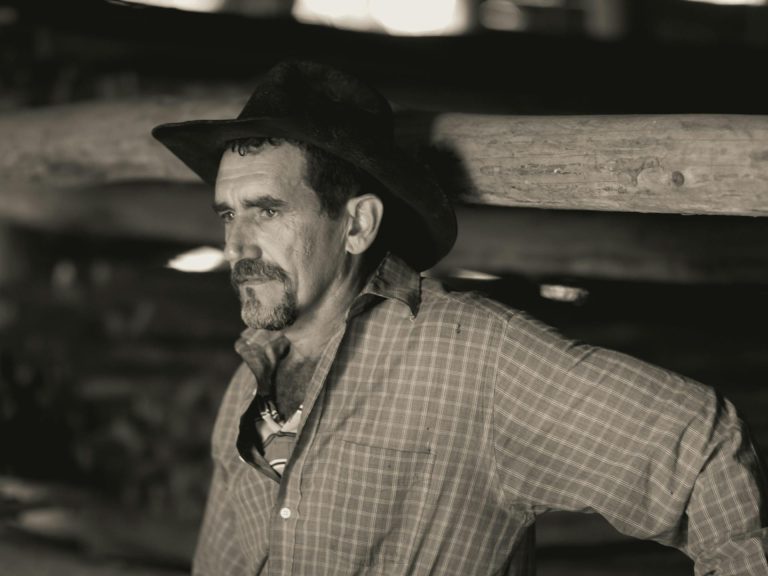
They were my friends of many years and not a little surprised when told that I was to be ordained deacon. They came to my ordination but didn’t know quite what to make of it… all that highfalutin ceremonial stuff was not their thing. Still, I was happy they were there and sorry I didn’t have time to spend with them just then. They left when the service ended. I’d meant to call but time went by. Then came a package from them … a gift for this deacon … a Benedictine Prayer Book. I keep it close. It’s a good world.
Dismissals
-
-
Implicit in a promise to write letters to a prisoner is the likelihood that you will be drawn into the life of another. In the main, I understand boundaries … but I also understand the responsibilities that go with caring for someone who is, most certainly, one of the very least among God’s children. I write letters … I send him a few bucks to buy something … I visit him … write to his kids … and I talk to his lawyer. Maybe I don’t understand boundaries after all … but I’ve been well repaid for whatever I have done for Mike … and for others.
-
There was a time when I believed that a better world would come about through systemic effort. If we just fix the system, the lowly will be lifted, justice and mercy will prevail. That may be true, though I never saw it happen. I tired myself out and sat on the sideline. Then Sr. Kathleen, an Ursuline nun, introduced me to a young man in the sixth grade. He could barely read. His arithmetic, history and geography were shaky. I knew that stuff, or a fair amount of it. Together we worked through it … we both discovered a new world.
-
Jesus often spoke in parables … The Good Samaritan … The Faithful Servant … The Pearl … The Mustard Seed. As Jesus’ followers, we might take up a parable … most any will do … retire to our inner room and ponder the parable … hold it close … let it do its work within us … live with the parable … test it and keep it close until the parable becomes a light within … an inner light to stand against darkness and uncertainty. And so we will grow, in spirit and strength, becoming ever more able to build the Kingdom … one brick … one prayer … one parable at a time.
-
“Racism tends to attract attention when it’s flagrant and filled with invective. But like all bigotry, the most potent component of racism is frame-flipping — positioning the bigot as the actual victim. So the gay do not simply want to marry; they want to convert our children into sin. The Jews do not merely want to be left in peace; they actually are plotting world take-over. And the blacks are not actually victims of American power, but beneficiaries of the war against hard-working whites. This is a respectable, more sensible bigotry, one that does not seek to name-call, preferring instead to change the subject and straw man.”
Ta-Nehisi Coates, writer and former journalist at The Atlantic (born 1975)
-
I cannot recall just how it came about, but I had befriended a man who led a troubled life. He never accounted himself worthy, only barely got by. Then, one day, the particulars lost to time, the man saw a child standing before him. And the child spoke to the man. Wise words, so the man told me, simple words, each word manifestly true. The child turned and was gone, but the words were all that was required to lift the man from the nothingness of his doldrums into a new way of being. He never saw the child again.
-
I made a mistake. Nothing serious, and no harm done. No one seemed to notice, but my pride took a hit. I mentioned my blunder to one man and he said, “Pshaw! Don’t worry! That’s nothin’!” When I am not making a mess of things, I’ve been reading through Thomas Merton’s Conjectures of a Guilty Bystander.* One of the many, small grace notes therein concerns one’s conversion to Christ … that our embrace of Christ’s will “… is not merely the conversion from bad habits to good habits, but nova creatura, becoming a totally new [person] in Christ, and in the Spirit.”
-
This is my wish for the days that remain … and perhaps yours, if you would have it so … the words of William Henry Channing, reformer and clergyman, 1810-1884: “To live content with small means; to seek elegance rather than luxury, and refinement rather than fashion; to be worthy, not respectable, and wealthy, not rich; to listen to stars and birds, babes and sages, with open heart; to study hard; to think quietly, act frankly, talk gently, await occasions, hurry never; in a word, to let the spiritual, unbidden and unconscious, grow up through the common — this is my symphony.”
-
My mother, Dorothy Dell Dennison, and her sister Lucy, were trained artists. My mother was a 1930 graduate of the Pennsylvania Academy of the Fine Arts. That year, they packed their easels and supplies and drove deep into Mexico. They sketched and painted landscapes in the wilds, and returned with their old Nash packed with paintings. I later learned that they had taken with them an ancient Maltby Henley pistol, patented in 1888. I could not but ask, whatever was that for? My mother shrugged … a tool of the artist’s trade … when walking the desert or sleeping in the car.
-
Another birthday is in my rearview mirror. Mercifully, my good health remains. Getting elderly has its rewards, though I’ve not had anyone hold the door for me. Lately, I have had renewed recollections of Jesus’ words … words long known to me though not appreciated: “Do unto others as you would have them do unto you … You cannot serve both God and money … Pray for your enemies …” Words return to me as I walk down the street … as I do chores … Jesus living and working among us … in our midst … the Jesus of every day … the simple graces … loving us always.
-
My father had sailed the coast of Maine and the islands of the Caribbean. He knew about the sea. When I was a boy, he took me to a rustic and rundown ship museum somewhere along the coast of Maine. There were perhaps fifty paintings of ships under sail. Some ships sailed stormy seas, the captain standing the foredeck, fierce wind, cresting waves. My father told me that these paintings were intended for the captains who had braved the fearsome seas. The paintings of cargo-laden ships, plying calm waters? Those were painted for the merchants who owned the ships.
-
John Steinbeck’s Grapes of Wrath [Penguin Edition, p.419] … In the 1930’s, the Joad Family has been forced out of Depression-era Oklahoma only to find themselves destitute and desperate in rural California. Tom Joad has been in prison and must now make his way alone. His parting words to his mother:
“Maybe … a fella ain’t got a soul of his own, but on’y a piece of a big one … I’ll be all aroun’ in the dark. I’ll be ever’where — wherever you look. Wherever they’s a fight so hungry people can eat, I’ll be there. Wherever they’s a cop beatin’ up a guy, I’ll be there … I’ll be in the way guys yell when they’re mad an’ — I’ll be in the way kids laugh when they’re hungry an’ they know supper’s ready. An’ when our folks eat the stuff they raise an’ live in the houses they build — why, I’ll be there.”